Eighteen years of watching booths win and lose crowds. Here's what actually stops traffic, holds attention, and turns walk-bys into conversations — including the ideas that aren't ours.
The principle
The best booth element isn't the biggest screen — it's a visible activity with zero learning curve. The person using your booth is your demo for the next twenty walking past. Everything below follows from that.
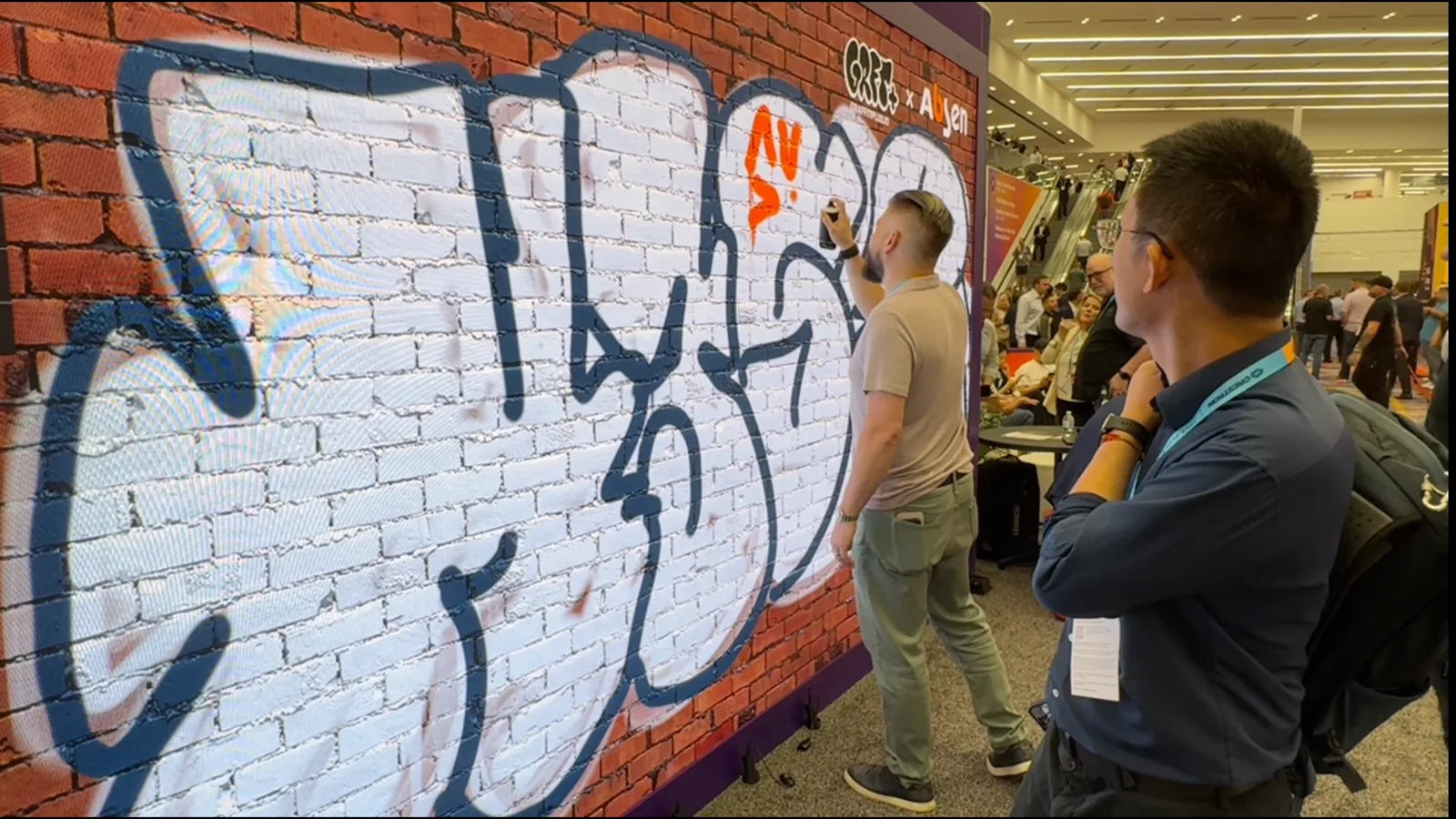
A live graffiti wall stops booth traffic cold — anyone can pick up a can and paint within seconds, and the crowd around the painters becomes part of the show. It's our own product, so judge accordingly, but it's also why Dell, Jabil and Absen built booths around it. Guests remember the booth that handed them a spray can instead of a brochure.
Not ours, and one of the best B2B booth draws we've ever seen. Everyone needs a better LinkedIn photo, the queue is full of exactly the people exhibitors want to talk to, and delivery by email is a lead capture that feels like a favor.
Turn guest creations into physical takeaways on the spot. At Comicon Toronto, fans painted designs that were printed onto T-shirts while they waited — and the shirts walked the floor advertising the booth all day. Works with prints, patches, stickers and hats too.
Live craft draws a circle — people will watch a mural take shape for a surprisingly long time. Pair the artist with guest participation so the audience doesn't just watch: at our booths, writers paint alongside first-timers and the energy carries the day.
Throughput thinking wins shows. Ask of any idea: how many people per hour can do this, can four friends do it together, and is it legible from twenty feet away? A brilliant experience with a 25-minute line and no spectacle serves fewer people than a simple one everyone can see working.
More that works
Ideas we've seen earn their floor space at shows from InfoComm to NACS — some ours, most not.
Phone charging with seats, decent coffee, cold water on a hot show floor. It sounds unglamorous, but people plan their day around these booths and dwell long enough for real conversations. Usefulness beats spectacle more often than exhibitors expect.
A game with visible scores keeps people coming back to the booth all day to defend their spot — and brings their colleagues to try to beat them. The repeat visits matter: second conversations close deals that first ones start.
At NBA All-Star, fans painted 3D basketballs and took them home as AR pieces they could show anyone from their phone. A takeaway that lives on the guest's phone keeps the booth working weeks after the show closes.
Every piece guests make should be shareable by design — branded, saved to their phone, posted before they've left the hall. Your reach stops being the people who walked past and becomes their feeds too.
The booths that convert treat the activity as the opener, not the distraction. Staff who help guests do the thing, then talk shop while the print comes out, start conversations that don't feel like pitches. The activity earns the right to the conversation.
The entrance installation at InfoComm — attendees painted a giant LED wall on their way into the show, and the wall stayed busy from doors to close.
View project →
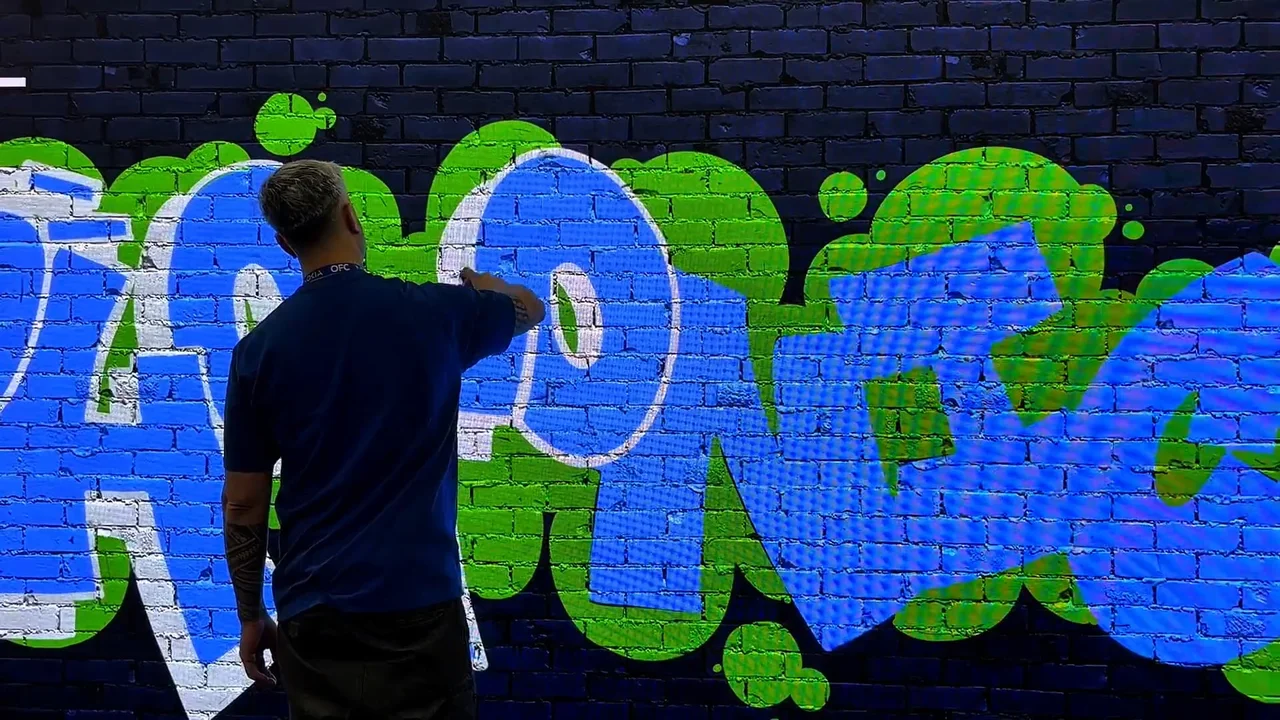
A B2B optics conference isn't the obvious place for graffiti — which is exactly why Jabil's booth drew the crowd it did. Engineers queued to paint, and stayed to talk.
View project →
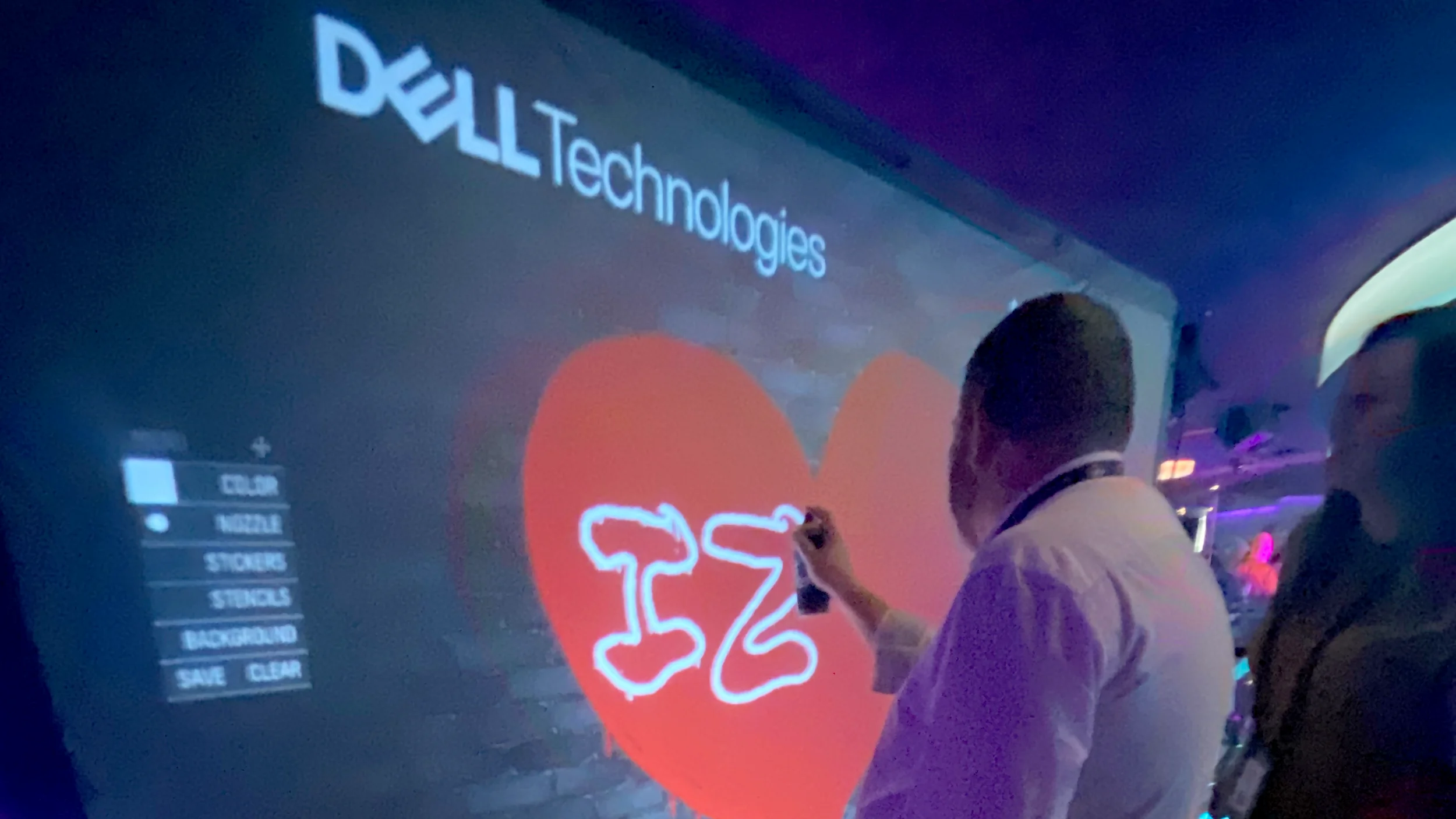
Dell put the wall at the heart of its booth — attendees created and shared branded pieces between sessions, and booth dwell time did the rest.
View project →Something happening. A booth where people are visibly doing something pulls a crowd; a booth where staff wait behind a counter doesn't. The strongest draws let attendees make or take away something — the person using your booth becomes the demo for the next twenty walking past.
Less than most exhibitors think. An LCD graffiti wall setup works in a standard 10x10 booth; LED walls scale up for island booths and entrance features. The bigger constraint is usually queue space — plan for where people stand and watch, because the watchers are the point.
Tie the takeaway to the contact. Guests get their artwork, photo or print delivered by email or a share link — that's a lead that handed you their details in exchange for something they wanted, which beats a fishbowl of business cards.
4–6 weeks for most US shows. For the biggest shows — CES, InfoComm, IAAPA — vendors book out earlier, so start when you commit to exhibiting.
Thinking about a graffiti wall for your booth? See the system, how brands use it, or our busiest trade show market: Las Vegas.
We'll get back to you right away to schedule a call and live demo.
Drop us a line with a few details about your show — we read every message and reply fast.
Email us Call +1 (323) 991-6463