The premise: real spray-can tools, in public, at scale. Anyone can pick up a can and make something — no instruction needed, no skill barrier. Eighteen years of working that single idea, with real graffiti writers shaping every version of it.
Graffiti is more than street art — it's a voice for stories untold, a canvas for unbridled creativity, a symbol of urban identity. We work with brands that get it. Partnering with us means engaging with graffiti culture respectfully, with local writers facilitating the experience and earning from their craft. The art form and the brand grow from each other.
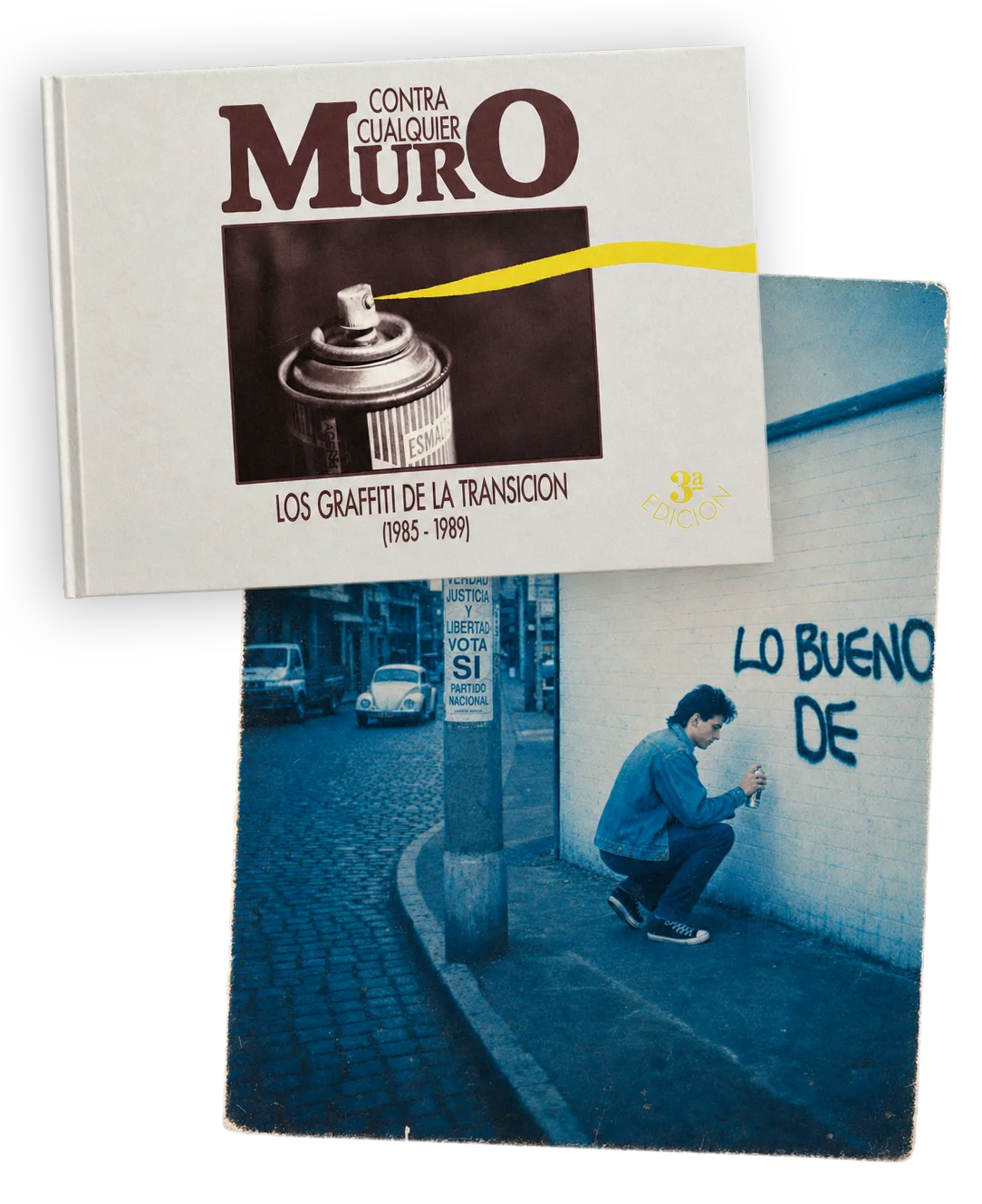
Mid-1980s. Alex Beim was writing graffiti on city walls. Pieces from those years appeared in Contra Cualquier Muro (1985–1989), a book documenting the early scene. The book isn't about him — his work just happens to be in it.
His twenties brought travel — Europe, Asia, every major city in the U.S. — and a closer look at what writers around the world could do with a single can of spray paint. A graphic design background sharpened the eye for letterform and composition. A move to Canada led to interactive work, and a question that wouldn't quit: how do you make participation feel real?
In 2008, with the founding of Tangible Interaction, Graffiti+ was the answer. Not a tech product — a continuation of the same thing that started on walls in the 80s. The tools have gotten more sophisticated. The question hasn't changed.
The first version: IR cameras, flashlights, and a multi-user collaborative painting interface projected onto city buildings. Graffiti writers tested it before anyone else.
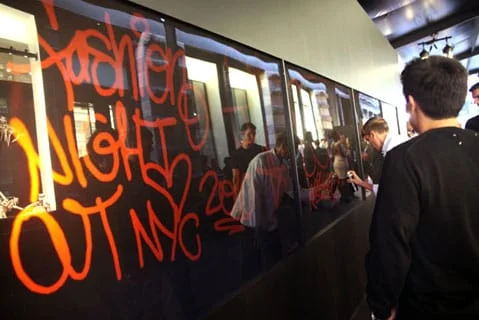
Fashion Week. Artists working alongside 500 guests across interactive screens wrapping the storefront. Spray can gesture integration built for this moment, physical movement as paint.
Featured in BizBash →Randall's Island. Motion capture tracking replaced earlier IR methods — more precision, more responsiveness. The kind of visual scale that stops foot traffic and holds it.
Samsung's concept showroom in London. Galaxy phones as spray-can controllers, active marker tracking, millimetre precision. The store's most-visited feature, with repeat visitors every day.
View project → Featured in GDR UK →Supported by NRC-IRAP, Canada's national R&D funding program for technology innovation. Five years to rebuild the core from scratch — fully custom 3D tracking, real paint physics, pressure and angle response, swappable caps, pro and user modes. No off-the-shelf components. Built to last.
NRC-IRAP supported →Paint onto 3D objects — basketballs, sneakers, custom forms. Export as AR. Art made at an event lives beyond it. People take their work home.
View Nike All-Star project →
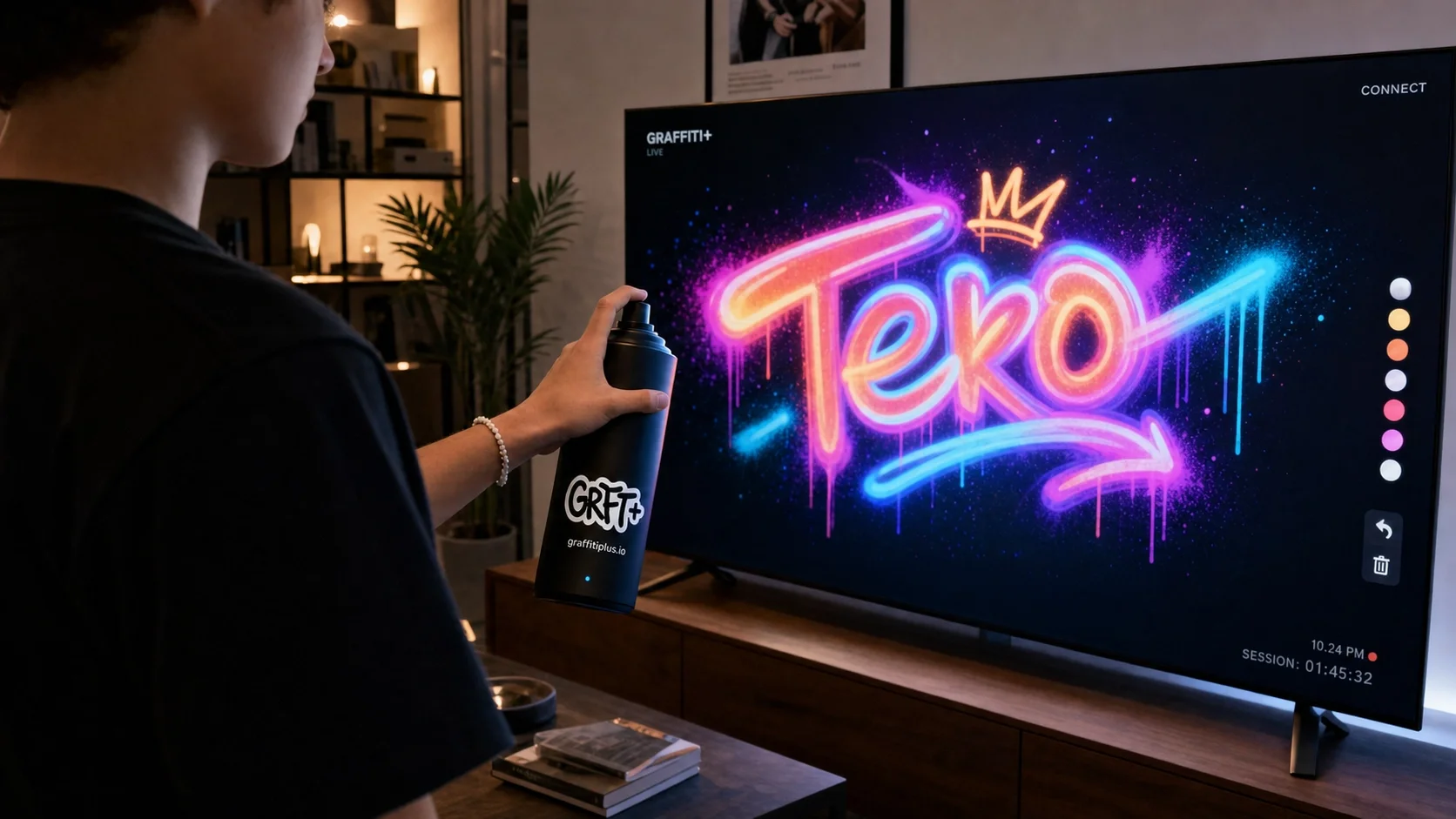
Eighteen years of building for the world's biggest events has produced something worth bringing home. A consumer version is in R&D — the same cultural roots, the same real tools, built for a different scale.
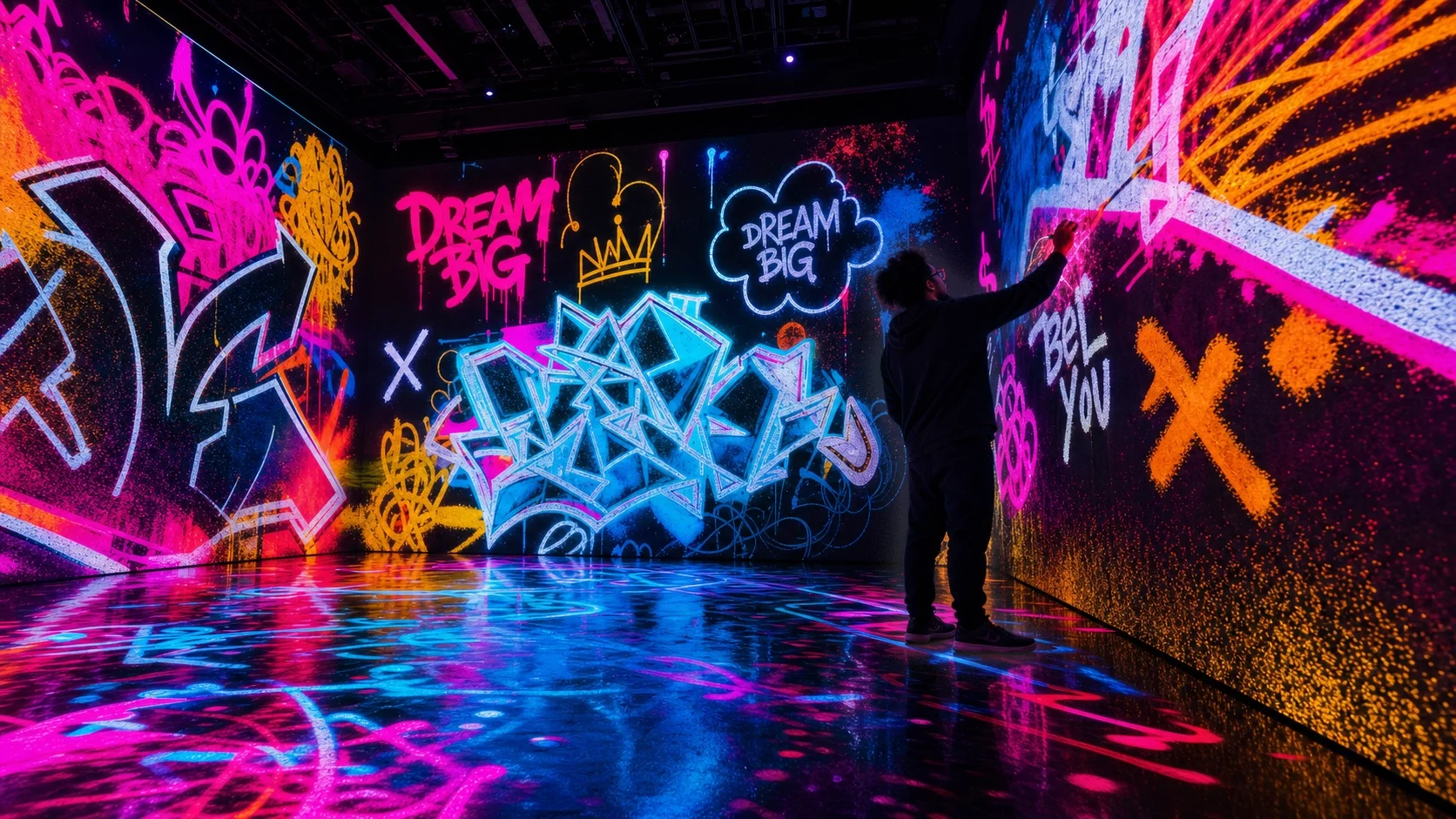
Beyond flat screens. Fully immersive environments where the art fills the room. The platform that started on a projected building in Richmond becomes something you step inside.
We'll get back to you right away to schedule a call and live demo.
Thank you — we'll be in touch.